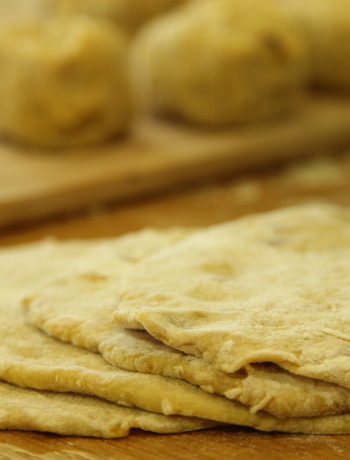
Uma receita fácil, deliciosa e simples, este Roti de batata-doce é uma versão mais saudável e sem glúten do famoso pão achatado. Ela leva apenas dois ingredientes, sem adição de óleo ou fermento.
A origem do roti ou pão achatado é muito antiga, onde o trigo foi produzido pela primeira vez e espalhado como pão preparado. Conforme descrito e ilustrado pelas descobertas de pesquisadores da civilização Indus, da Mesopotâmia e do antigo Egito, é plausível que tenham sido os primeiros alimentos processados. O roti é um pão achatado redondo e sem fermento, tradicionalmente feito com farinha e água.
O roti se metamorfoseou de um alimento básico do cotidiano doméstico para a culinária global, servido como acompanhamento de vários pratos, popularmente consumido com uma refeição de curries ou dal na Índia. Com o homus no Oriente Médio, a feijoada nas Américas do Sul e os sabores na África. A lista continua em todos os continentes e em todos os lugares como wraps com recheios salgados ou doces.
O segredo para fazer um roti macio e perfeito que incha lindamente quando cozido é garantir que a proporção entre a farinha e a água esteja correta. Se você adicionar muita farinha, o resultado será um roti duro. Como essa receita envolve a adição de purê de batata-doce, o calor da batata-doce também ajuda a deixar o roti macio.
É importante não trabalhar demais a massa, pois isso pode resultar em uma massa bagunçada e pegajosa que exigirá mais farinha. Quando o roti inchar e estiver completamente cozido, coloque o pão achatado de lado e mantenha-o coberto com um pano de prato. Isso retém o calor e a umidade da massa, mantendo-a macia e evitando que ela seque e fique dura e borrachuda.
Você pode servir o roti com dal, mistura de ervilhas doces, curry de feijão ou apenas com seu pesto favorito , e você pode seguir a receita abaixo para aprender a fazer esse adorável roti vegano macio e doce.
The recipe is divided into 4 segments: cooking sweet potatoes, making the mash, making the dough, cooking and storing the roti. Nutrition Benefits: Sweet Potatoes are highly nutritious. They are a good source of carbohydrates yet are considered low glycemic, making them beneficial for those who are regulating their sugar levels. They also are rich in vitamin A and C, which are important in keeping a healthy immune system and helps in fighting bacteria and viruses.
Ingredients
2 medium-sized sweet potatoes, cut in half
1 cup buckwheat flour or all-purpose flour for non-glutenfree
1 tsp basil or coriander leaves, finely chopped (optional)
Salt to taste
Instructions
Prepare the sweet potatoes
1)
Add 2-3 cups of water to a pot. Place the sweet potatoes with skin into the water, ensuring that at least 90% is covered with water. Place the pot on a stovetop at high heat and bring to a boil. Alternatively, you can also place sweet potatoes in a steamer.
2)
Sweet potatoes cook rather quickly. Let the sweet potatoes cook for at least 30 minutes, or until it is very soft. You can check this by piercing the sweet potato with a fork. Once thoroughly cooked, remove the potatoes from the pan.
3)
Peel the sweet potatoes by using a fork to pierce the potato and hold to remove the skin. Again, it would help if you worked quickly.
4)
The potatoes need to be hot for this recipe, so you may use a clean kitchen towel to make handling the hot sweet potatoes easier.
5)
Mash the sweet potatoes until there are no more clumps found.
6)
Add one cup of buckwheat flour (gluten-free) to a mixing bowl. If you aren’t going gluten-free, you may use all-purpose flour.
7)
Add the mashed sweet potato. Start by mixing with a fork as the sweet potato will be too hot to handle.
8)
Now is a good moment to add chopped basil if you like as it cools. Work the mixture with your hand until a dough is formed.
9)
Do not overwork it as it may start to get sticky, which will require adding more flour, resulting in a hard roti.
Make the roti:
1)
Once the dough is formed, dust some flour onto the work surface to begin work on the dough. Use a rolling pin to roll it into a thick log. Then cut the log into 6 to 8 equal portions.
2)
Keep a bowl of flour close by to dust your hands with a little flour and take one portion of the dough. Roll it between your palms into a ball, then lightly flatten it into a disc.
3)
Then dip the disc into the bowl of flour, covering it on both sides.
4)
Now lightly flatten the edge of the disc with your thumb and first finger. This will help keep its round shape when we roll it out.
5)
Set it aside or place it back into the mixing bowl. Do the same for the rest of the pieces.
6)
Take one disc and place it on the work surface, and begin to roll it out. Turn the rolled dough to the other side and continue to roll out by applying even pressure so that the roti can rotate on itself to create a nice round shape. Dust with more flour as needed, but be careful not to add too much as this may result in a hard flatbread.
7)
Roll the dough out until the roti is about 2 mm thick.
Cook the roti:
1)
Heat a Tawa, skillet, or crepe pan on medium heat. When the pan is hot, place the roti on it and allow it to cook for 20 to 30 seconds. Then flip the roti at 30-second intervals. When the roti starts to bubble, leave it to cook for a little longer than 30 seconds before flipping. The bubbles mean that the hot air is cooking it from the inside to cook the roti for a total of two to two and a half minutes.
2)
Once cooked, place the roti in a container or a plate lined with a clean tea towel to keep this plate covered.
3)
Adjust the temperature of the skillet as needed when it gets too hot. Brush off any loose flour on the pan before adding the next roti. Now repeat for the rest of the roti.
4)
Always keep the rotis covered with the tea towel to remain soft. This will also prevent them from getting soggy with the steam from the container.
5)
Occasionally, flip the roti in the container so that the last one is not sandwiched between the other flatbreads. This helps to soften them further.
Dada Shivananda is a renunciate monk of the Ananda Marga order, dedicating his life to social service and teaching people about practices that evolve body, mind and soul. He has two decades of experience with delicious vegetarian food that is also healing.